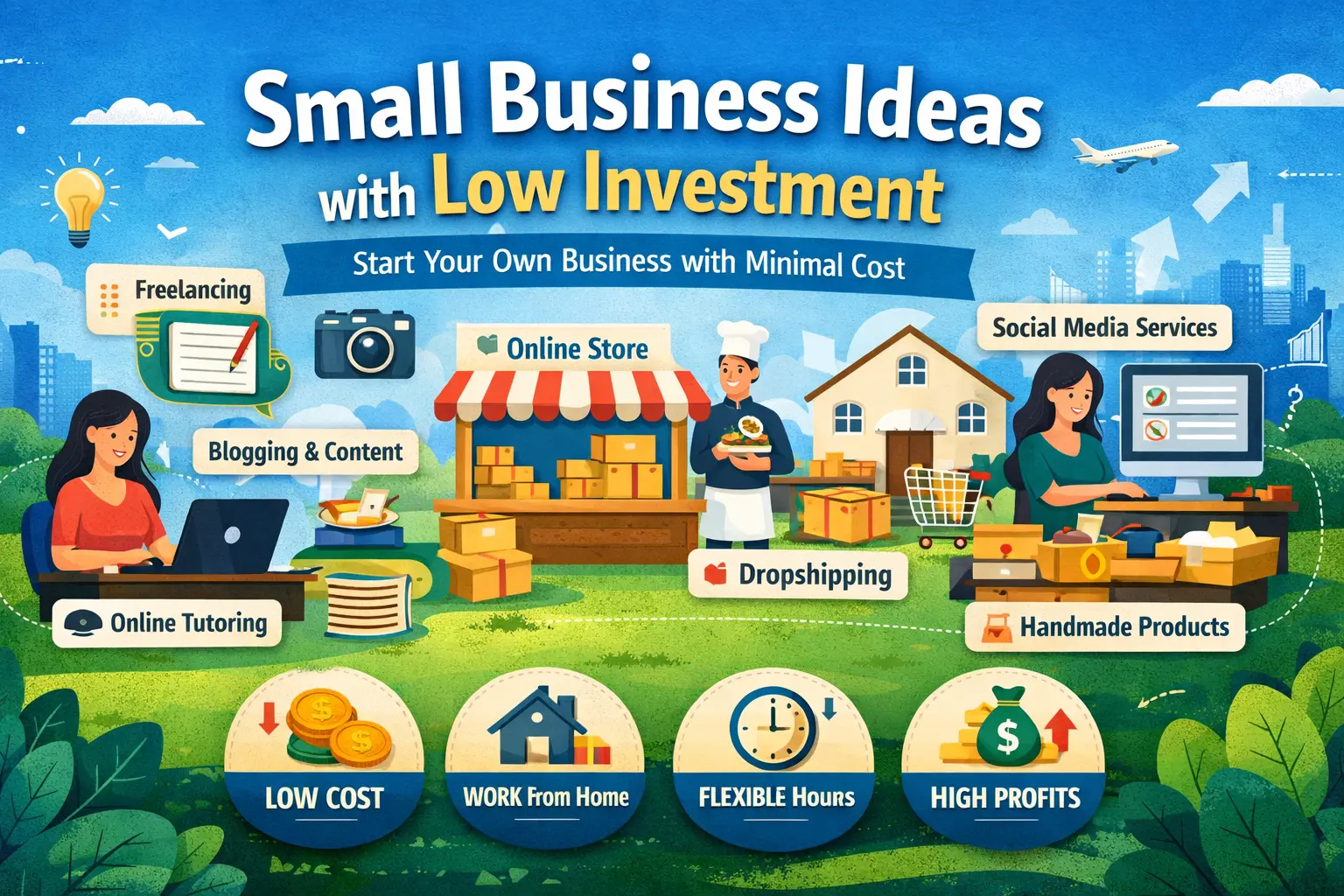
Small Business Ideas With Low Investment, starting a business no longer requires huge capital, a physical office, or years of experience. In today’s digital economy, thousands of people are building profitable ventures with minimal investment — sometimes from their homes. If you want financial independence, a side income, or a full-time career shift, low-investment small business ideas can be your gateway to entrepreneurship.
This detailed guide explores practical, profitable, and beginner-friendly business ideas that require little money but offer strong growth potential.
Top Small Business Ideas With Low Investment
Below are some of the most profitable and practical businesses you can start with limited capital.
1. Freelance Services
Freelancing is one of the easiest ways to start earning online.
Popular Freelance Skills
- Content writing
- Graphic design
- Video editing
- Web development
- Social media management
- SEO services
- Data entry
All you need is a laptop, internet connection, and a marketable skill.
Why It Works
Companies worldwide outsource work to freelancers to reduce costs. You can find clients through online platforms, social media, or personal networking.
Small Business Ideas With Low Investment:
2. Online Store or Dropshipping Business
E-commerce continues to grow rapidly, making online selling a lucrative opportunity.
Options to Consider
- Dropshipping (no inventory required)
- Handmade products
- Print-on-demand merchandise
- Digital products (ebooks, templates, courses)
- Niche products
Startup Requirements
- E-commerce platform or marketplace account
- Basic marketing skills
- Supplier partnership
Dropshipping is particularly attractive because you don’t need to buy stock upfront.
3. Home-Based Food Business
If you love cooking or baking, a home food business can generate excellent profits.
Business Ideas
- Homemade snacks
- Cakes and desserts
- Catering for small events
- Lunch boxes for offices or students
- Pickles and traditional foods
Why This Business Succeeds
Food is a necessity, not a luxury. With quality and hygiene, customers quickly spread the word.
4. Social Media Management Services
Businesses struggle to maintain consistent social media presence. This creates demand for social media managers.
Services You Can Offer
- Content creation
- Account management
- Advertising campaigns
- Audience engagement
- Analytics reporting
You only need basic marketing knowledge and creativity.
5. Blogging or Content Creation
Starting a blog, YouTube channel, or niche website requires very little investment but can become highly profitable over time.
Income Sources
- Advertising revenue
- Affiliate marketing
- Sponsored content
- Digital product sales
- Membership programs
Choose a niche you are passionate about, such as technology, fashion, health, travel, or business.
6. Online Tutoring or Coaching
Education services are always in demand.
Subjects You Can Teach
- Academic subjects
- Languages
- Music or art
- Coding
- Test preparation
- Professional skills
You can conduct classes via video calls or recorded lessons.
7. Handmade Products Business
Creative individuals can monetize their skills by selling handmade goods.
Examples
- Jewelry
- Candles
- Soap and skincare products
- Home décor items
- Customized gifts
Handmade items often command higher prices due to uniqueness.
8. Digital Marketing Agency (Small Scale)
Many small businesses need online marketing but cannot afford large agencies.
Services to Offer
- Search engine optimization
- Pay-per-click advertising
- Email marketing
- Website optimization
- Local business promotion
You can start solo and expand as you gain clients.
9. Virtual Assistant Services
Entrepreneurs and executives hire virtual assistants to handle administrative tasks.
Common Tasks
- Email management
- Scheduling appointments
- Customer support
- Data entry
- Research work
This business requires organization and communication skills more than money.
10. Reselling Business
Reselling involves buying products at low prices and selling them at a profit.
Sources of Products
- Wholesale markets
- Clearance sales
- Second-hand items
- Imported goods
- Local artisans
You can sell through social media, online marketplaces, or local networks.
How to Choose the Right Business Idea
Not every idea suits everyone. Choose a business aligned with your strengths and resources.
Consider These Factors
- Your skills and interests
- Market demand
- Competition level
- Startup cost
- Profit potential
- Time availability
Starting with something you enjoy increases your chances of long-term success.
Steps to Start a Low-Investment Business
1. Conduct Market Research
Understand customer needs, pricing trends, and competitors.
2. Create a Simple Business Plan
Outline your goals, target audience, and revenue model.
3. Start Small
Avoid unnecessary expenses in the beginning.
4. Build an Online Presence
Use social media, messaging apps, and a basic website to reach customers.
5. Focus on Customer Satisfaction
Happy customers lead to repeat business and referrals.
Marketing Strategies for Small Businesses
Even the best business idea fails without proper promotion.
Cost-Effective Marketing Methods
- Social media marketing
- Word-of-mouth referrals
- Local community groups
- Email marketing
- Search engine optimization (SEO)
- Collaboration with influencers or local businesses
Consistency is more important than budget.
Common Mistakes to Avoid
Many new entrepreneurs fail due to preventable errors.
Pitfalls to Watch Out For
- Starting without research
- Overspending early
- Ignoring customer feedback
- Poor time management
- Lack of marketing effort
- Expecting instant profits
Success usually comes from persistence and continuous improvement.
Scaling Your Business Over Time
Once your business starts generating stable income, consider expanding.
Growth Strategies
- Add new products or services
- Hire freelancers or staff
- Invest in branding
- Automate repetitive tasks
- Enter new markets
Scaling should be gradual to avoid financial strain.
People Also Ask (PAA)
What is the cheapest business to start?
Freelancing, blogging, virtual assistance, and reselling are among the cheapest businesses because they require minimal equipment and no physical location.
Can I start a business with almost no money?
Yes. Many online businesses can be launched with little to no upfront cost using free tools and platforms.
Which small business is most profitable for beginners?
Service-based businesses like freelancing, tutoring, digital marketing, and consulting often yield high profits because they rely more on skills than capital.
How long does it take for a small business to become profitable?
It varies, but most small businesses take 6 months to 2 years to achieve consistent profitability, depending on effort, strategy, and market demand.
Is a home-based business legal?
In most areas, home businesses are legal, but some may require registration, permits, or compliance with local regulations.
Authoritative References
- U.S. Small Business Administration (SBA) — Guide to Starting a Business
- World Bank — Small and Medium Enterprises (SMEs) Finance Reports
- International Labour Organization (ILO) — Entrepreneurship Development Resources
- OECD — SME and Entrepreneurship Outlook Reports
- Harvard Business Review — Small Business Strategy Articles