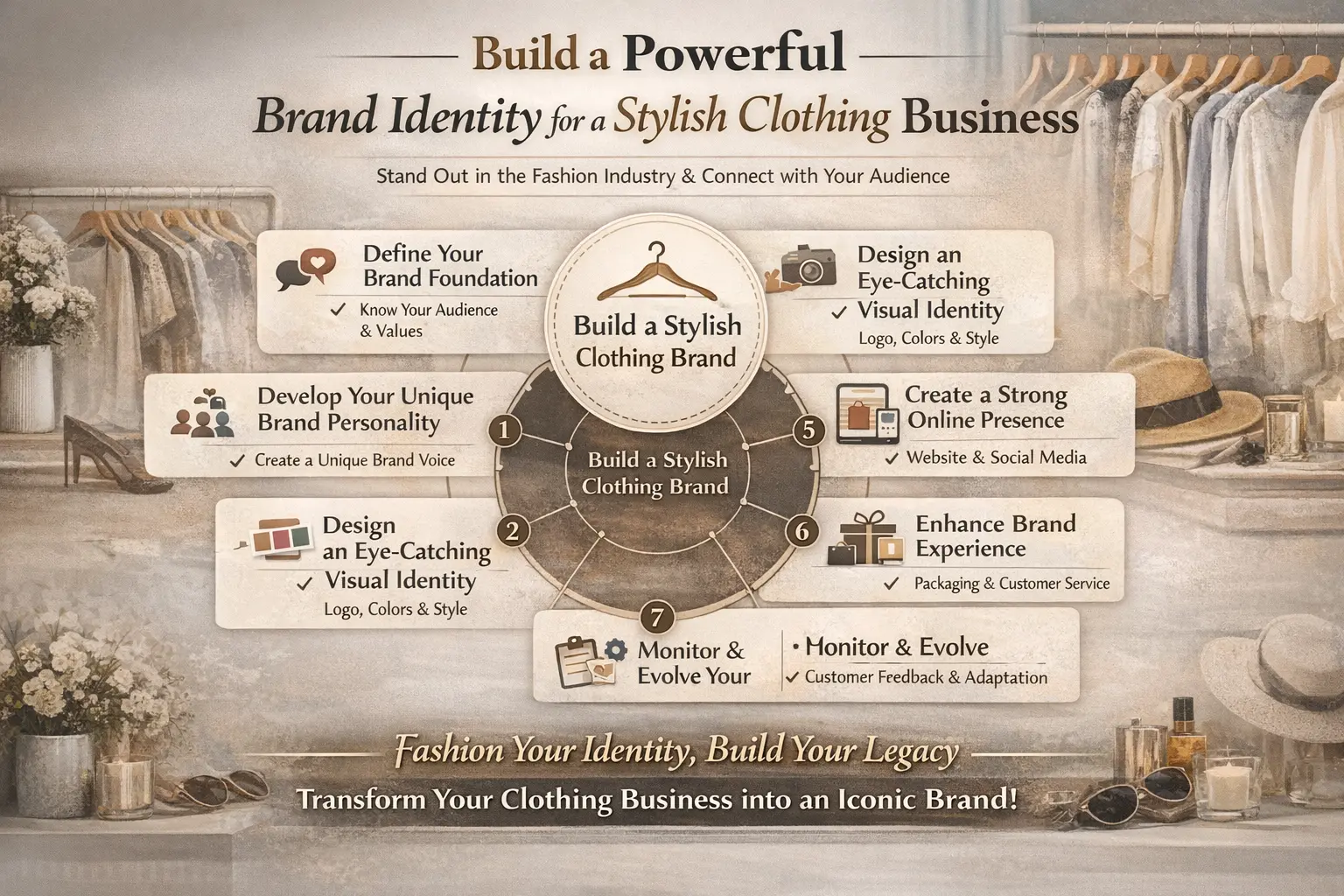
In today’s competitive fashion industry, creating great designs is only half the battle. What truly sets a stylish clothing business apart is a strong and recognizable brand identity. Your brand identity defines how customers perceive your business, connects emotionally with your audience, and builds long-term loyalty.
Whether you are launching a new fashion label or rebranding an existing one, developing a powerful brand identity is essential for standing out in a crowded market. This guide will walk you through everything you need to know—from defining your brand’s personality to building visual consistency and trust.
Why Brand Identity Matters for a Stylish Clothing Business
A strong brand identity is not optional—it’s a necessity in the fashion world.
Builds Recognition and Trust
When your brand looks and sounds consistent, customers recognize it instantly. Familiarity builds trust, which leads to repeat purchases.
Differentiates You from Competitors
Fashion is saturated with options. A unique identity helps your brand stand out, even if competitors offer similar products.
Creates Emotional Connections
People connect with brands that reflect their values and lifestyle. A powerful identity turns customers into loyal fans.
Supports Long-Term Growth
Strong branding allows you to expand into new collections, markets, or collaborations without losing credibility.
Step 1: Define Your Brand’s Core Foundation
Before working on visuals or marketing, you must clearly define who you are as a brand.
Identify Your Target Audience
Understanding your audience is the foundation of brand identity.
Ask yourself:
- Who are they? (age, gender, lifestyle)
- What styles do they prefer?
- What problems does your clothing solve?
- Where do they shop online?
A stylish clothing brand aimed at streetwear lovers will have a very different identity than one focused on luxury formal wear.
Define Your Brand Values and Mission
Your values influence everything—from design choices to marketing tone.
Examples of brand values:
- Sustainability
- Inclusivity
- Luxury craftsmanship
- Minimalism
- Affordability with style
Your mission should clearly explain why your brand exists and what makes it meaningful.
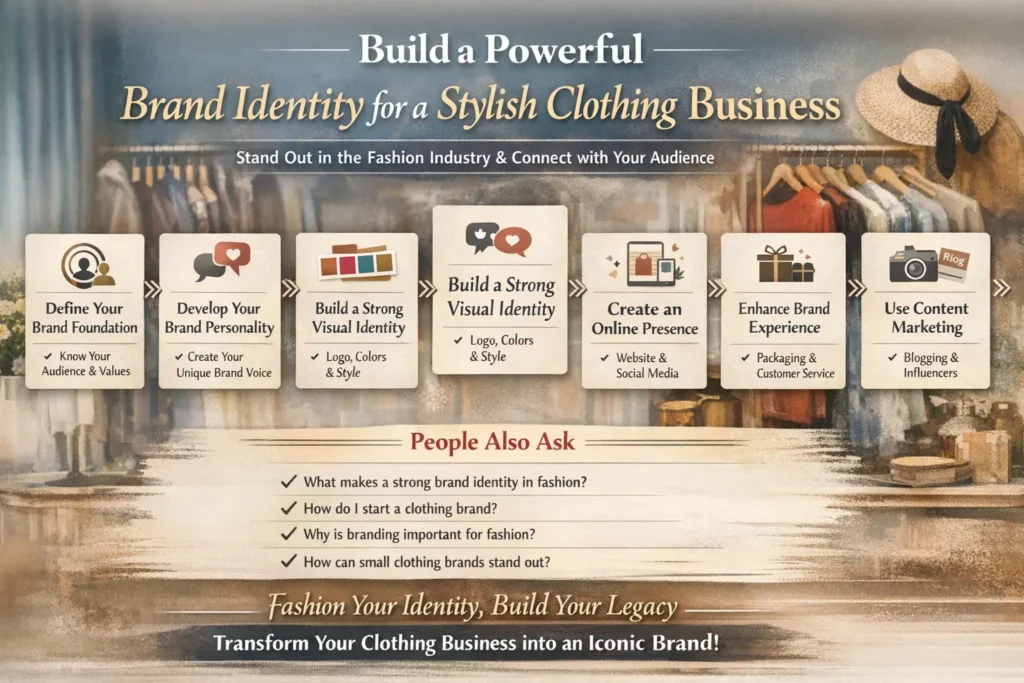
Step 2: Develop a Unique Brand Personality
Your brand personality is how your clothing business would feel if it were a person.
Choose a Clear Brand Voice
Decide how your brand communicates:
- Bold and confident
- Elegant and refined
- Friendly and casual
- Trendy and youthful
Your tone should stay consistent across your website, social media, emails, and advertisements.
Create a Brand Story
Storytelling is powerful in fashion branding. Share:
- Why you started your clothing business
- What inspired your designs
- The journey behind your brand
A compelling brand story makes your business relatable and memorable.
Step 3: Build a Strong Visual Identity
Visual identity is often the first thing customers notice about your clothing brand.
Design a Memorable Logo
Your logo should reflect your brand’s style and values. Whether minimalist or bold, it must be:
- Scalable
- Easy to recognize
- Timeless
Avoid overly complex designs that lose impact on labels or social media profiles.
Choose Brand Colors and Typography
Colors and fonts create emotional responses.
- Neutral tones often signal elegance and luxury
- Bright colors suggest energy and youth
- Clean fonts communicate modern style
- Serif fonts add sophistication
Stick to a limited color palette and 1–2 fonts for consistency.
Maintain Visual Consistency
Your brand identity should look the same everywhere:
- Website
- Social media
- Packaging
- Labels
- Marketing materials
Consistency strengthens brand recall and professionalism.
Step 4: Create a Strong Online Presence
In today’s digital world, your online presence defines your brand identity.
Design a Fashion-Focused Website
Your website should:
- Reflect your brand aesthetics
- Be mobile-friendly
- Use high-quality images
- Offer a smooth shopping experience
A stylish clothing brand must look stylish online as well.
Leverage Social Media Branding
Social media is where fashion brands truly shine.
Tips:
- Use consistent filters and color themes
- Share behind-the-scenes content
- Highlight customer photos
- Post styling tips and outfit inspiration
Platforms like Instagram, TikTok, and Pinterest are especially powerful for clothing brands.
Step 5: Build Trust Through Brand Experience
Brand identity is also about how customers feel when interacting with your business.
Focus on Packaging and Presentation
Premium packaging enhances perceived value. Thoughtful details like thank-you cards or branded tags leave a lasting impression.
Deliver Consistent Customer Experience
From browsing to checkout to delivery, every touchpoint should align with your brand values.
A stylish brand must feel stylish at every stage.
Step 6: Use Content Marketing to Strengthen Brand Identity
Content helps communicate your brand’s personality and expertise.
Start a Fashion Blog
A blog allows you to:
- Share styling guides
- Discuss fashion trends
- Educate customers
- Improve SEO visibility
Well-written content positions your brand as an authority in the fashion niche.
Collaborate with Influencers
Partner with influencers who reflect your brand identity. Authentic collaborations help reach new audiences while reinforcing your brand image.
Step 7: Monitor, Evolve, and Stay Authentic
Fashion trends change, but your core brand identity should remain stable.
Gather Customer Feedback
Listen to what your audience says about your brand. Reviews and feedback help refine your identity without losing authenticity.
Evolve Without Losing Consistency
You can modernize your visuals or messaging, but your brand values and personality should stay intact.
People Also Ask: Brand Identity for Clothing Businesses
What makes a strong brand identity in fashion?
A strong fashion brand identity includes a clear target audience, consistent visuals, a unique brand voice, emotional storytelling, and a memorable customer experience.
How do I create a brand identity for a clothing startup?
Start by defining your mission, values, and audience. Then develop a brand personality, visual elements, and consistent messaging across all platforms.
Why is branding important for a clothing business?
Branding builds recognition, trust, and loyalty. It helps customers emotionally connect with your clothing brand and choose it over competitors.
How can small clothing brands stand out?
Small brands can stand out by focusing on niche markets, authentic storytelling, strong visual consistency, and personalized customer experiences.
How long does it take to build a brand identity?
Building a brand identity is an ongoing process. While initial branding can take weeks, strengthening recognition and trust takes consistent effort over time.