
When you slip into a soft hoodie or a relaxed pair of joggers that feel just right—not too warm, not too light—you’re likely experiencing the comfort of French terry cloth fabric. It’s one of those materials that quietly becomes a favorite, not because it’s flashy, but because it feels good every single time you wear it.
This blog explores French terry from a real user’s perspective—what it feels like, why people love it, and where it truly shines in everyday life.
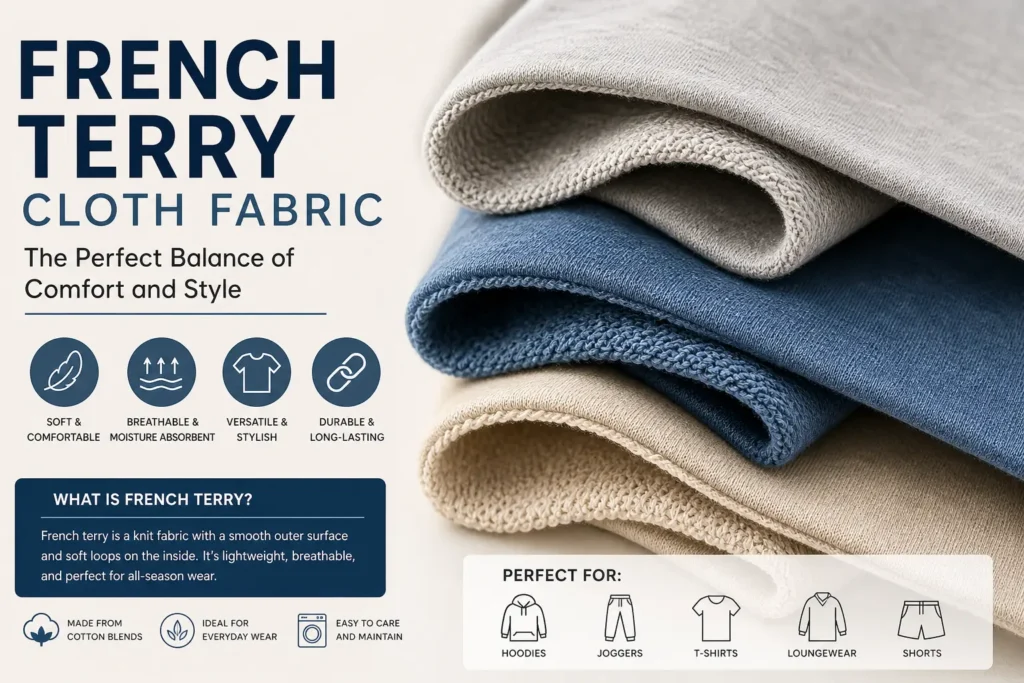
A Quick Look at Its Structure
- Outer side: Smooth, clean, and slightly structured
- Inner side: Looped texture that feels soft against the skin
- Material: Usually cotton or cotton blends with polyester or elastane
- Type: Knit fabric (not woven)
This combination is what gives French terry its signature feel—cozy without being bulky.
Why French Terry Feels So Good to Wear
You don’t really appreciate French terry until you wear it for a full day. It adapts to your body and environment in a way many fabrics don’t.
Breathability That Works in Real Life
One of the standout features is breathability. The looped interior allows air to circulate, helping regulate body temperature.
This means:
- You don’t feel overheated indoors
- You stay comfortable during mild outdoor weather
- It works well for layering
Softness Without Overheating
Unlike fleece, which traps heat, French terry offers a lighter warmth. The loops trap just enough air to keep you comfortable without making you sweat excessively.
Moisture Absorption
The looped side can absorb moisture, making it ideal for:
- Post-workout wear
- Casual lounging
- Travel outfits
It doesn’t feel sticky or damp like some synthetic fabrics.
Key Characteristics of French Terry Fabric
Here’s a simple breakdown of what makes French terry unique:
| Feature | Description |
|---|---|
| Fabric Type | Knit fabric |
| Texture | Smooth outside, looped inside |
| Weight | Light to medium (180–300 GSM typical) |
| Stretch | Moderate natural stretch |
| Breathability | High |
| Absorbency | Moderate |
| Common Fibers | Cotton, polyester blends |
| Best Use | Loungewear, activewear, casual clothing |
These features explain why it’s such a versatile fabric in modern fashion.
French Terry vs Other Fabrics
Many people confuse French terry with fleece or traditional terry cloth. While they may look similar, they feel very different.
Comparison Table
| Fabric Type | Texture | Warmth | Best For |
|---|---|---|---|
| French Terry | Smooth outside, loops inside | Medium | All-season casual wear |
| Fleece | Brushed, fluffy | High | Cold weather |
| Terry Cloth | Loops on both sides | Medium-high | Towels, robes |
French terry stands out because it’s balanced—it doesn’t go to extremes.
Everyday Uses of French Terry Fabric
This is where French terry truly shines. It’s not just a fabric—it’s part of daily life.
Hoodies and Sweatshirts
Probably the most common use. French terry hoodies feel:
- Soft but not heavy
- Structured yet relaxed
- Perfect for layering
Joggers and Sweatpants
If you’ve ever owned a pair of joggers you didn’t want to take off, they were likely French terry.
Why people love them:
- Comfortable for long hours
- Breathable enough for light activity
- Durable for repeated washing
T-Shirts and Shorts
Lightweight French terry versions are becoming more popular, especially in warm climates.
Loungewear Sets
Modern lifestyle trends have made matching lounge sets a staple—and French terry is often the fabric of choice.
How French Terry Is Made
French terry is created using a knitting process that forms loops on one side of the fabric.
These loops are left uncut, unlike fleece where they are brushed into a soft pile.
Common Fiber Blends
| Material | Benefit |
|---|---|
| Cotton | Soft, breathable, natural |
| Polyester | Durable, wrinkle-resistant |
| Spandex/Elastane | Stretch and flexibility |
| Bamboo/Tencel | Eco-friendly softness |
The blend you choose affects how the fabric feels and performs.
Pros and Cons of French Terry Fabric
Advantages
- Comfortable for all-day wear
- Breathable and moisture-absorbing
- Versatile across seasons
- Easy to care for
- Durable and long-lasting
Disadvantages
- Not warm enough for very cold weather
- Can feel slightly textured (loops) on sensitive skin
- May shrink if not cared for properly
Care Tips: Keeping It Soft and Durable
French terry is easy to maintain, but a little care goes a long way.
Best Practices
- Wash in cold water
- Use mild detergent
- Turn garments inside out
- Avoid high heat drying
- Air dry when possible
These simple steps help preserve the softness and structure over time.
Real-Life Experience: What It Feels Like
From a user’s perspective, French terry feels like a reliable companion in your wardrobe.
- On a cool morning, it keeps you warm without overheating
- During a long day, it stays comfortable and breathable
- At home, it feels relaxed and effortless
It’s not just about style—it’s about how you feel wearing it.
People Also Ask (FAQs)
Is French terry fabric good for summer?
Yes, especially lightweight versions. Its breathability makes it suitable for mild to warm weather.
Is French terry better than fleece?
It depends on your needs. French terry is lighter and more breathable, while fleece is warmer and better for winter.
Does French terry shrink?
It can shrink slightly, especially if made from 100% cotton. Washing in cold water helps prevent this.
Is French terry fabric expensive?
It ranges from affordable to premium, depending on fiber quality and brand.
Can you wear French terry for workouts?
Yes, it’s ideal for light workouts or warm-ups due to its moisture absorption and flexibility.
Key Facts & Figures
- Typical weight: 180–300 GSM
- Stretch: Up to 20–30% elasticity
- Common use: Hoodies, joggers, loungewear
- Fabric type: Knit construction with looped backing
Final Thoughts
French terry cloth fabric isn’t just another textile—it’s a lifestyle fabric. It fits into everyday routines effortlessly, offering comfort without compromise.
Whether you’re working from home, heading out casually, or relaxing after a long day, French terry delivers a balance that few fabrics can match.