
There’s something instantly captivating about Korean clothes dress . It feels soft yet structured, minimal yet expressive. Whether you’ve noticed it through K-dramas, K-pop idols, or Instagram fashion trends, Korean clothes dress carry a unique balance—one that blends cultural depth with modern ease.
At the heart of it all is the Hanbok—a traditional Korean dress that continues to inspire today’s fashion in ways that feel surprisingly wearable.
The Story Behind Korean Clothing
Korean fashion didn’t just appear overnight. It evolved—quietly, beautifully—through centuries of cultural shifts.
Historically, the hanbok was everyday wear. Loose, flowing, and designed for comfort, it reflected both practicality and elegance. Over time, as Western fashion entered Korea, hanbok became more ceremonial, worn during weddings, festivals, and cultural celebrations.
But here’s the interesting part: it never disappeared. Instead, it transformed.
Modern designers began reimagining traditional silhouettes into something new—something global.
What Makes Korean Dresses Unique?
1. The Signature Silhouette
Traditional Korean clothes dress are known for their graceful shape:
- A fitted top (jeogori)
- A high-waisted, flowing skirt (chima)
This combination creates a soft, flattering silhouette that suits many body types.
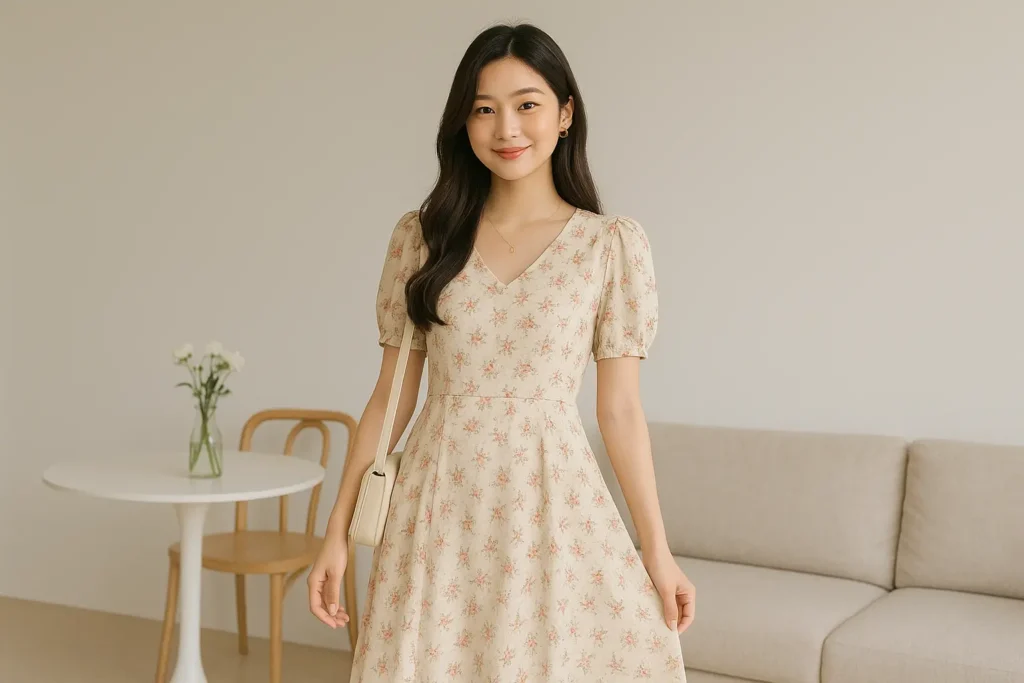
Modern Korean dresses borrow this idea—flowy skirts, structured tops, and effortless movement.
2. Colors That Speak
In traditional Korean clothing, colors aren’t random. They often represent:
| Color | Meaning |
|---|---|
| Red | Good fortune & joy |
| Blue | Calm & stability |
| Yellow | Balance & harmony |
| White | Purity & simplicity |
Even in modern Korean fashion, you’ll notice soft pastels and clean tones—echoes of these traditional meanings.
3. Fabric That Feels Alive
Traditional hanbok used natural materials like silk, cotton, and hemp. These fabrics were breathable and lightweight—perfect for Korea’s seasonal climate.
Today’s Korean dresses still focus on comfort, often using cotton blends and soft synthetics for everyday wear.
Traditional vs Modern Korean Dresses
Traditional Korean Dress (Hanbok)
- Worn for weddings, festivals, and ceremonies
- Made from silk or traditional fabrics
- Loose and layered design
- Rich in symbolism and cultural meaning
Modern Korean Dress
- Designed for everyday use
- Shorter lengths and simplified cuts
- Influenced by global fashion trends
- Often machine-washable and practical
Modern hanbok, in particular, is a fascinating hybrid—keeping tradition alive while making it wearable for daily life.
The Rise of Korean Fashion Worldwide
Korean fashion didn’t just stay in Korea—it went global.
The rise of K-pop, K-dramas, and the broader “Korean Wave” (Hallyu) played a huge role. Today, Korean-inspired outfits are seen on international runways and red carpets.
Designers are blending traditional elements with modern aesthetics, creating styles that feel both cultural and contemporary.
Even celebrities have embraced hanbok-inspired looks, bringing Korean fashion into global spotlight moments.
Popular Types of Korean Dresses Today
1. Hanbok-Inspired Dresses
These are modern adaptations of traditional hanbok:
- Shorter skirts
- Minimal embroidery
- Everyday-friendly fabrics
They keep the essence but remove the formality.
2. Korean Street Style Dresses
If you’ve ever watched a K-drama, you’ve seen these:
- Oversized fits
- Neutral tones
- Layered looks
- Soft, feminine silhouettes
They feel relaxed but intentional.
3. Minimalist Korean Dresses
Clean lines, simple cuts, and muted colors define this category.
Think:
- Beige, cream, black palettes
- Straight or A-line shapes
- Subtle elegance
4. K-pop Inspired Dresses
Bold, experimental, and trend-driven:
- Statement pieces
- Unique cuts
- Mix of traditional and futuristic elements
Why People Love Korean Dresses
There’s a reason Korean fashion resonates with so many people.
Effortless Comfort
Loose fits and breathable fabrics make Korean dresses easy to wear all day.
Timeless Aesthetic
They don’t rely heavily on trends. Instead, they focus on balance and simplicity.
Cultural Depth
Even modern pieces carry subtle references to Korean heritage—making them feel meaningful, not just stylish.
Key Facts & Figures About Korean Clothing
| Aspect | Insight |
|---|---|
| Origin | Dates back to ancient Korean kingdoms |
| Traditional Dress | Hanbok |
| Modern Influence | Strongly shaped by K-pop & global fashion |
| Fabric Evolution | From silk & hemp to cotton blends |
| Global Impact | Rapid growth through Korean Wave (Hallyu) |
Hanbok itself dates back centuries and was once daily wear before becoming ceremonial attire.
People Also Ask
What is a Korean dress called?
The traditional Korean dress is called hanbok, which literally means “Korean clothing.”
Can you wear Korean dresses daily?
Yes. While traditional hanbok is mostly ceremonial today, modern versions are designed for everyday use.
Why is Korean fashion so popular?
Korean fashion gained global popularity through K-pop, K-dramas, and social media influence, making it highly visible worldwide.
Are Korean dresses modest?
Generally, yes. Korean fashion often emphasizes modesty, layering, and elegant silhouettes.
The Future of Korean Dresses
Korean fashion is still evolving—and that’s what makes it exciting.
Designers are constantly experimenting:
- Mixing Western cuts with traditional elements
- Creating gender-neutral designs
- Using sustainable fabrics
The line between “traditional” and “modern” continues to blur, making Korean dresses more accessible than ever.
Final Thoughts
Korean clothes—especially dresses—aren’t just about style. They’re about feeling.
They carry history without feeling heavy. They embrace modernity without losing identity. And most importantly, they make fashion feel personal again.
Whether it’s a flowing hanbok or a simple minimalist dress inspired by Korean street style, the appeal lies in how natural it feels to wear—like it was always meant to be part of your wardrobe.
Authoritative References
University of Brighton – Contemporary Korean fashion research
Victoria and Albert Museum – Hanbok traditional Korean dress
Fibre2Fashion – Hanbok history and modern trends
Korea JoongAng Daily – Modern hanbok and global influence