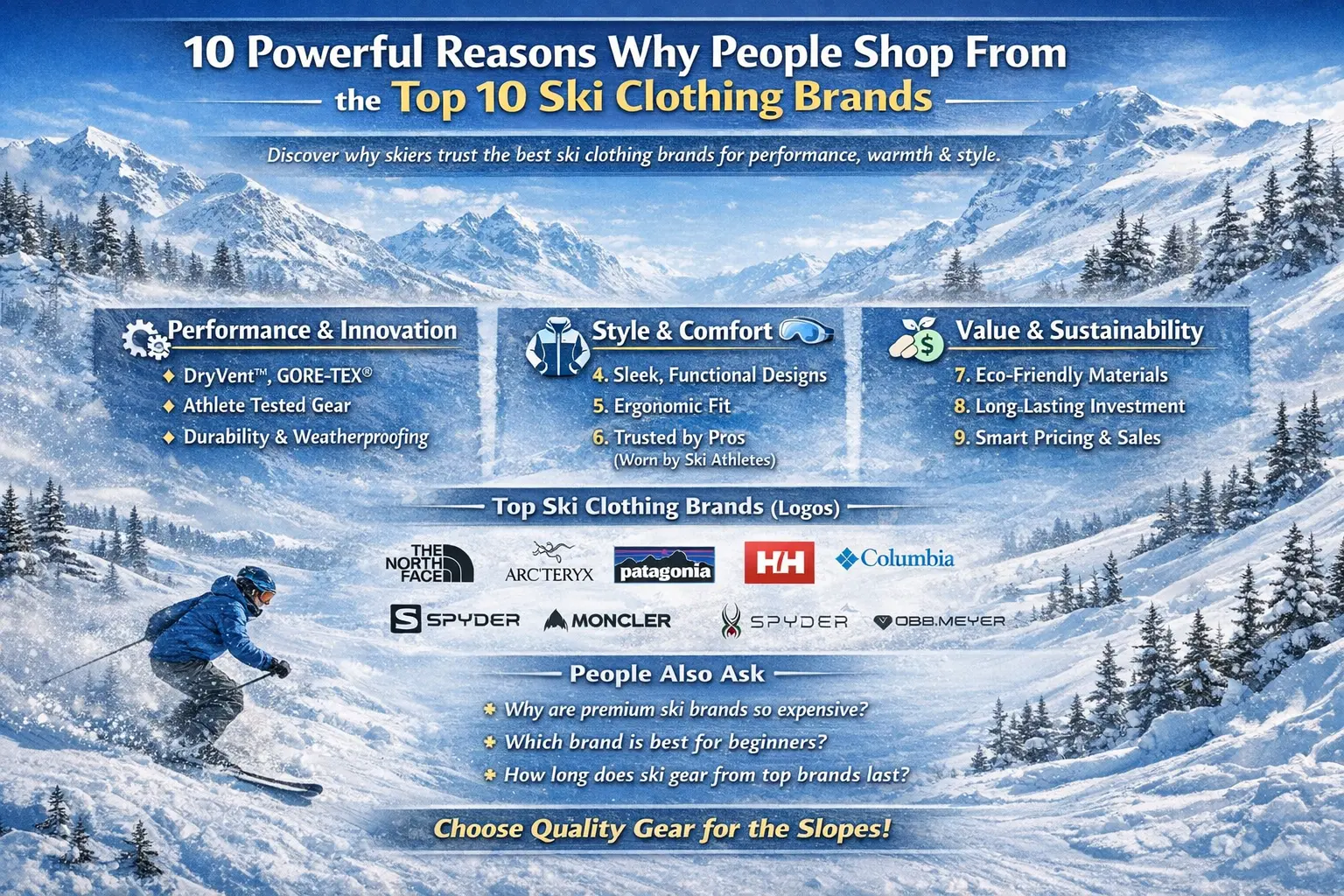
When temperatures drop and snow blankets the mountains, skiers and snowboarders face a critical decision: what to wear on the slopes. The right ski clothing can mean the difference between an exhilarating day on the mountain and a miserable, cold experience. This explains why discerning winter sports enthusiasts consistently turn to established ski clothing brands that have proven their worth in harsh conditions.
The ski apparel market has evolved dramatically over the past decade, with technology and fashion merging to create gear that’s both functional and stylish. Understanding why people gravitate toward specific brands can help you make informed decisions about your own ski wardrobe investment.
The Science Behind Premium Ski Clothing
Advanced Weather Protection Technology
Top ski clothing brands invest millions in research and development to create fabrics that can withstand extreme conditions. Modern ski wear incorporates waterproof breathable membranes, moisture-wicking layers, and insulation technologies that regulate body temperature effectively. These innovations keep skiers dry from both external moisture and internal perspiration, a balance that cheaper alternatives struggle to achieve.
Brands like Arc’teryx and Patagonia have pioneered Gore-Tex integration and developed proprietary fabrics that offer superior protection without sacrificing mobility. This technological edge explains why experienced skiers willingly pay premium prices for gear that performs reliably in subzero temperatures and heavy snowfall.
Durability That Justifies the Investment
Quality ski clothing represents a significant upfront cost, but the durability factor makes it economically sensible. Premium brands construct their garments with reinforced seams, abrasion-resistant materials, and superior craftsmanship that withstands years of use. Skiers who initially hesitate at the price point often become loyal customers after experiencing how long these garments last compared to budget alternatives.
The North Face and Helly Hansen, for instance, offer warranty programs and repair services that extend the lifespan of their products even further. This commitment to longevity resonates with environmentally conscious consumers who prefer buying less frequently rather than contributing to textile waste.
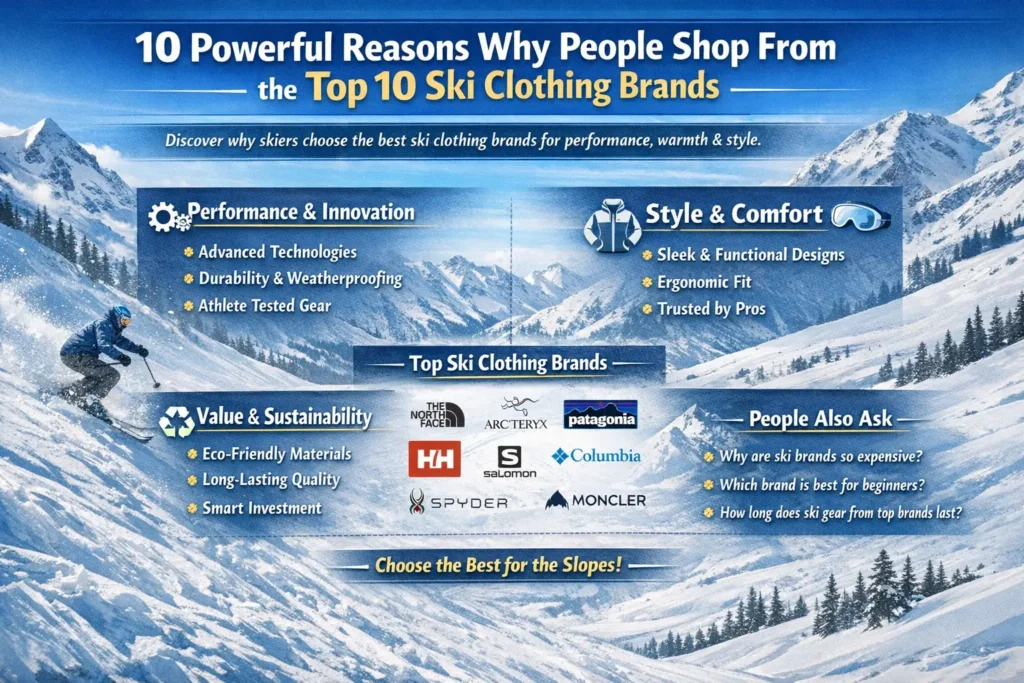
Top 10 Ski Clothing Brands and Why They Matter
Arc’teryx: Engineering Excellence
Arc’teryx has cultivated a devoted following among serious skiers who appreciate meticulous attention to detail. Their backcountry-tested designs feature anatomical patterning that allows unrestricted movement during aggressive skiing. The brand’s minimalist aesthetic appeals to those who value function over flashy designs, while their innovation in materials science keeps them at the industry’s cutting edge.
Patagonia: Sustainability Meets Performance
Patagonia attracts environmentally conscious skiers who refuse to compromise on performance. Their commitment to using recycled materials, fair labor practices, and environmental activism creates an emotional connection with customers beyond the product itself. The brand’s Worn Wear program encourages repair and reuse, aligning with values that extend beyond a single ski season.
The North Face: Trusted Reliability
With decades of mountain heritage, The North Face offers comprehensive ski collections that cater to various skill levels and budgets. Their widespread availability and consistent quality make them a go-to choice for families and casual skiers who want proven performance without extensive research. The brand successfully balances technical innovation with accessibility.
Helly Hansen: Maritime-Inspired Expertise
Helly Hansen’s Norwegian roots and maritime heritage translate into exceptional waterproofing technologies. Their ski wear excels in wet, heavy snow conditions, making them particularly popular in coastal mountain regions. Professional ski patrollers and instructors frequently choose Helly Hansen for its reliability during long days on the mountain.
Mountain Hardwear: Technical Precision
Mountain Hardwear appeals to skiers who scrutinize specifications and performance metrics. The brand focuses on lightweight, packable designs perfect for backcountry touring and multi-day ski trips. Their attention to ventilation systems and temperature regulation makes them favorites among high-output skiers.
Salomon: Integrated Systems Approach
Salomon’s strength lies in creating cohesive gear ecosystems where clothing, boots, and equipment work harmoniously together. Skiers appreciate the thoughtful integration features, such as jacket-to-pant attachment systems and compatibility with their helmet and goggle lines. This systems approach simplifies gear selection for newcomers to the sport.
Columbia: Value-Driven Performance
Columbia democratizes ski clothing technology by offering advanced features at accessible price points. Their Omni-Heat thermal reflective technology and Omni-Tech waterproofing compete with premium brands while maintaining affordability. This value proposition attracts budget-conscious families and occasional skiers who need reliable gear without luxury pricing.
Mammut: Alpine Heritage
Mammut brings Swiss precision and mountaineering expertise to ski apparel. The brand resonates with European skiers and those who appreciate heritage craftsmanship. Their designs prioritize mountain safety and functionality, with features developed through generations of alpine experience.
Norrøna: Scandinavian Innovation
Norrøna remains relatively exclusive but commands fierce loyalty among those who discover it. Their Norwegian design philosophy emphasizes clean lines, superior materials, and features tailored to harsh Nordic conditions. The brand appeals to skiers seeking something distinctive from mainstream options.
Marmot: Backcountry Specialists
Marmot’s expertise in mountaineering translates into ski clothing that excels in remote, challenging environments. Their focus on lightweight insulation and weather protection makes them popular among ski mountaineers and adventurous backcountry enthusiasts who venture beyond resort boundaries.
Understanding Consumer Psychology in Ski Apparel
The Performance-Status Connection
Ski clothing serves dual purposes: protecting the wearer and signaling expertise to peers. Recognizable premium brands function as social markers on the mountain, indicating commitment to the sport and appreciation for quality. This psychological dimension influences purchasing decisions as much as technical specifications.
Community and Brand Loyalty
Ski culture fosters strong community bonds, and brand preference often reflects group identity. Skiers develop emotional attachments to brands that have kept them safe and comfortable during memorable mountain experiences. This loyalty transcends rational decision-making, creating generational brand preferences within skiing families.
Investment in Experience
Premium ski clothing enhances the overall skiing experience, allowing enthusiasts to extend their time on the mountain regardless of weather conditions. When people invest thousands in lift tickets, travel, and equipment, spending proportionally on quality clothing makes logical sense. Uncomfortable or inadequate clothing can ruin expensive ski trips, making prevention worthwhile.
People Also Ask
How much should I spend on ski clothing?
Budget between $500-$1,500 for a complete ski outfit including jacket, pants, base layers, and accessories. Quality outer layers typically cost $200-$600 each, while base layers range from $50-$150 per piece. Investing more upfront often reduces long-term costs through improved durability.
What’s the difference between cheap and expensive ski jackets?
Expensive ski jackets feature superior waterproofing membranes, better insulation, more thoughtful ventilation systems, and enhanced durability. They maintain performance longer and offer features like powder skirts, helmet-compatible hoods, and multiple pockets. Cheaper options may use waterproof coatings that deteriorate quickly.
Do I need brand-name ski clothing for beginner skiers?
Beginners benefit from quality ski clothing but don’t necessarily need top-tier brands. Mid-range options from established brands offer adequate protection and comfort for learning. As skills progress and time on the mountain increases, upgrading to premium brands becomes more justified.
How often should ski clothing be replaced?
Quality ski clothing lasts 5-10 years with proper care. Replace items when waterproofing fails despite retreatment, insulation compresses significantly, or zippers and seams fail. Regular maintenance including washing with technical detergents and reapplying DWR treatments extends lifespan considerably.
Are expensive ski brands worth the money?
For frequent skiers facing challenging conditions, premium brands justify their cost through superior performance, durability, and comfort. Occasional skiers in mild conditions may find mid-range brands sufficient. Consider your skiing frequency, preferred terrain, and climate when evaluating value.